Selecting Durable Kitchen Flooring
Replacing a worn-out kitchen floor requires careful consideration of durability, style, and maintenance. Kitchens endure heavy foot traffic, spills, dropped utensils, and cooking residue, making them the most demanding room in the home. A resilient, tough floor is essential to withstand these daily challenges.
Why Durability Matters
Kitchens face constant activity: grabbing snacks from the fridge, preparing meals, washing dishes, and unloading groceries. Beyond foot traffic, floors contend with hot, cold, sticky, or oily spills, dropped pots, pans, knives, and dishes, and the general mess of cooking and cleaning. Choosing a durable, resilient material is key to ensuring your kitchen floor stands up to these diverse abuses.
Solid Wood
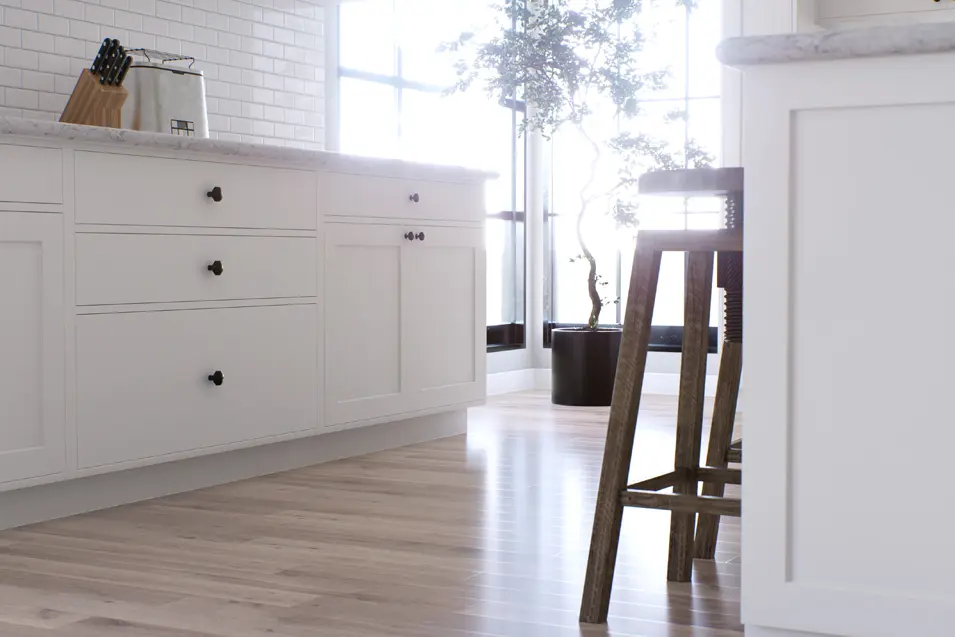
Solid wood is a strong choice for kitchen floors when treated properly and paired with the right hardwood, such as hard maple, ash, birch, elm, or red oak. Softer woods like willow or alder are less suitable. Solid wood offers natural beauty, warmth, and the unique ability to be refinished multiple times. A polyurethane finish enhances its resistance to wear, though it’s sensitive to standing water. Adding ceramic tile, vinyl, linoleum, or an absorptive rug near the sink can protect against spills while adding style.
Engineered Wood
For a budget-friendly wood look, engineered wood is ideal. It features a wood veneer over a plywood base, is easier to install (via floating, gluing, nailing, or stapling), and can be refinished once. However, it’s less durable than solid wood, prone to dents and damage from spills or heavy traffic.
Exploring Non-Wood Options
Plastic Laminate
Plastic laminate is a popular alternative to wood, often outperforming it in durability. It resists moisture, dents, and scrapes and lasts 15–25 years, depending on quality. Available in various finishes, it’s easy to install but cannot be refinished and may suffer from major spills, such as plumbing leaks.
Ceramic Tile
For maximum durability, ceramic tile excels, handling heavy traffic, spills, and stains with ease. Available in diverse styles and colors, it coordinates well with kitchen décor. However, installation is complex, and its hard, cold surface can be tough on feet and joints or break dropped dishes.
Vinyl
Vinyl is the top choice for resilience and low maintenance. It repels moisture, stains, scratches, and UV rays, is easy to install, and comes in premium options mimicking slate, stone, or tile. It’s ideal for busy kitchens with minimal upkeep needs.
Linoleum
Linoleum, often confused with vinyl, is made from natural materials like wood products and linseed oil. It matches vinyl’s resistance to moisture, scratches, and UV rays, is easy to install, and cleans effortlessly, offering a sustainable yet durable option.
Final Considerations
For top durability, ceramic tile is unmatched but costly. Vinyl and linoleum offer versatility, trendy styles, and easy maintenance on a budget. For a wood aesthetic, plastic laminate balances durability and style, while engineered wood is more affordable but less durable than solid wood, which requires careful selection and treatment.
Research manufacturers’ products, focusing on durability, upkeep, installation, and cost. Follow installation guidelines to maintain warranties. Consider your floor’s impact on your home’s resale value, prioritizing quality, style, and longevity. Consult sales experts to ensure your choice meets your kitchen’s needs.